.png)
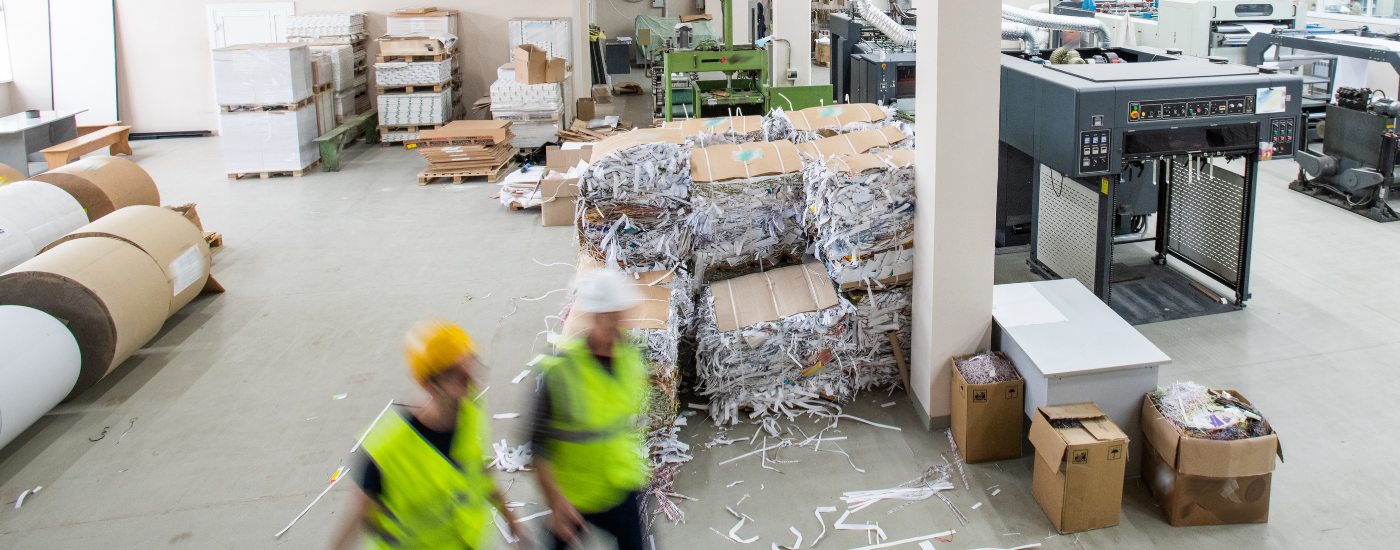
You put confidential documents into a secure collection container. A professional shredding company collects them. The records are destroyed.
But what happens to all that paper afterward?
For many businesses and homeowners, shredding seems like the end of the process. In reality, secure destruction is only one stage in the paper lifecycle.
After confidential documents have been securely destroyed, the resulting paper can move into appropriate recycling channels, where usable fiber may be recovered and turned into new paper products.
The order matters:
Protect the information → Destroy the documents → Recycle the material
Black Ops Destruction provides secure document shredding throughout Ohio and the Midwest for businesses, organizations, and residents, with responsible downstream handling after destruction.
Why Shredding Comes Before Recycling
Paper is recyclable, but confidential documents create an information-security problem that ordinary recycling does not solve.
A bank statement, personnel file, medical record, contract, or customer document can remain readable while it is:
- Sitting in an office recycling bin
- Moved by cleaning personnel
- Stored near a loading dock
- Transported by a recycling company
- Sorted before processing
- Waiting at a recycling facility
That is why confidential records should not simply be placed intact into ordinary recycling because the material itself is recyclable.
For sensitive records, the safer sequence is:
Retention complete → Authorized for disposal → Secure destruction → Recycling
Professional shredding addresses the confidential information first. Once the documents have been destroyed, the remaining paper can be managed as recyclable material when an appropriate recycling stream is available.
Step 1: Confidential Documents Are Collected Securely
The process starts before a document reaches the shredder.
Businesses using professional shredding services may place confidential records into secure collection containers between scheduled services.
Documents can include:
- Employee records
- Customer information
- Financial documents
- Medical paperwork
- Contracts
- Invoices
- Account records
- Internal reports
- Printed emails
- Legal documents
- Other confidential business records
For a one-time purge, records may instead be collected from filing cabinets, archive boxes, storage rooms, or other designated areas.
Residential customers may have boxes containing tax returns, bank statements, medical bills, insurance paperwork, and other personal records.
Secure collection helps keep those records from entering ordinary waste or recycling before the sensitive information has been destroyed.
Step 2: Documents Move Through a Controlled Chain of Custody
Confidential records remain sensitive until destruction is complete.
That means security matters while documents are:
- Collected
- Moved through a facility
- Loaded for service
- Transported when applicable
- Temporarily stored
- Prepared for destruction
A professional provider should be able to explain how it maintains control over confidential material throughout this process.
Depending on the service, safeguards may include:
- Secure collection containers
- Trained personnel
- Background-checked employees
- Controlled handling procedures
- GPS-tracked vehicles
- Secure facilities
- Video monitoring
- Documented destruction procedures
The goal is to maintain accountability from collection through final destruction.
Step 3: Documents Are Shredded
Once records reach the destruction stage, professional equipment mechanically reduces the paper into pieces.
Depending on the selected service, destruction may happen at your location or at a secure facility.
Mobile On-Site Shredding
With mobile on-site shredding, documents are destroyed at the customer's location.
This means confidential records can be destroyed before the resulting shredded material leaves the property.
Secure Off-Site Shredding
With secure off-site document shredding, documents are collected under controlled procedures and transported to a secure destruction facility.
Both can be part of a secure professional destruction program.
The primary difference is where the destruction takes place.
Step 4: The Original Documents Become Unusable
The purpose of professional shredding is not simply to make paperwork harder to read.
It is to physically destroy the records so they no longer remain intact as usable documents.
Once processed, the original:
- Tax returns
- Employee files
- Bank statements
- Medical records
- Contracts
- Customer records
- Legal files
- Internal reports
become a large stream of shredded paper.
At this stage, the information-security objective has been addressed and the paper can move into the next part of its lifecycle.
Step 5: Destruction Is Documented
Businesses may receive a Certificate of Destruction documenting that the shredding service was completed.
Depending on the provider and service, documentation may include:
- Service date
- Customer information
- Type of service
- Destruction confirmation
- Other project details
Organizations may retain this documentation for:
- Internal records
- Vendor oversight
- Records-management procedures
- Audit preparation
- Information-security documentation
- Destruction policies
A Certificate of Destruction documents the service performed. It does not determine whether a record was legally or operationally eligible for destruction.
The organization remains responsible for deciding which records are authorized for disposal.
Step 6: Shredded Paper Is Prepared for Recycling
Once the confidential information has been destroyed, the resulting material can be prepared for downstream recycling.
This is the key distinction:
Secure shredding protects the information.
Recycling addresses the paper material afterward.
Large volumes of shredded paper may be consolidated or compacted before transportation to make handling more efficient.
From there, the material can move to a recycling or paper-processing facility.
The exact process varies depending on the recycler, paper grade, equipment, local infrastructure, and market conditions.
Step 7: Shredded Paper Moves to a Recycling Facility
After destruction, the shredded material can be transported into an appropriate recycling stream.
At this point, it is no longer being handled as organized confidential files.
It is being handled as destroyed paper material.
The paper may then undergo additional preparation and sorting before it can be converted back into usable fiber.
Step 8: The Paper Is Sorted and Cleaned
At a recycling facility, recovered paper may go through sorting and screening processes designed to separate usable fiber from unwanted materials.
Depending on the facility, processing may address:
- Staples
- Small paper clips
- Plastic
- Tape
- Adhesives
- Other contaminants
Different recycling facilities use different equipment and processing methods.
This is one reason customers should follow the shredding provider's instructions regarding what can and cannot be placed into secure paper collection containers.
Step 9: Shredded Paper Is Turned Into Pulp
One of the major stages in paper recycling is pulping.
Recovered paper is mixed with water and mechanically processed, breaking the material down into fibers and creating a slurry commonly referred to as pulp.
The pulp may then undergo additional:
- Screening
- Cleaning
- Refining
- Contaminant removal
- De-inking when applicable
By this stage, the material has moved far beyond the original confidential documents.
Step 10: Recovered Fiber Is Prepared for Manufacturing
After cleaning and processing, usable paper fibers can be prepared for new manufacturing applications.
The exact process depends on factors such as:
- Incoming paper grade
- Fiber quality
- Recycling equipment
- Product specifications
- Manufacturer requirements
- Market demand
Recycled fiber may also be blended with other fiber depending on the product being manufactured.
Step 11: The Fibers Become New Paper Products
Recovered paper fibers can eventually be used to manufacture new paper-based products.
Depending on the material and manufacturing requirements, recycled paper may become:
- Tissue products
- Paper towels
- Toilet tissue
- Packaging
- Paperboard
- Cardboard products
- Other recycled paper goods
The specific end product depends on the quality of the recovered fiber and the needs of the manufacturer.
So while the confidential information reaches the end of its lifecycle at the shredder, the paper itself may continue into an entirely new use.
Does Shredded Paper Actually Get Recycled?
Yes, shredded paper can be recycled when an appropriate recycling stream is available.
But there is an important distinction between professional post-destruction recycling and putting loose shredded paper into a household recycling bin.
Loose shredded paper can cause problems for some curbside recycling systems because:
- Small pieces can be difficult to sort
- Loose material can scatter
- Small shreds can interfere with processing equipment
- Local facilities may not accept shredded paper
- Preparation requirements can vary
For that reason, household recycling rules for shredded paper differ by community.
Professional document destruction operates differently because large quantities of shredded material can be consolidated and directed into appropriate recycling channels after the security-sensitive destruction stage is complete.
If you shred paper at home, check your local recycling program before placing it into curbside recycling.
Can Shredded Paper Become Office Paper Again?
Potentially, but not necessarily.
Recovered fibers can be used in many different paper products.
The final use depends on:
- Fiber quality
- Paper grade
- Manufacturing requirements
- Recycling processes
- Market demand
- How many times the fibers have already been recycled
Paper fibers do not remain usable indefinitely.
Each recycling cycle can shorten and weaken the fibers, which can affect what products they can be used to manufacture.
Is Paper Shredding Environmentally Friendly?
Secure shredding and responsible recycling can complement each other.
Shredding addresses the confidentiality of the information.
Recycling addresses what happens to the physical paper after destruction.
When destroyed paper enters an appropriate recycling stream, usable fiber can be recovered rather than unnecessarily discarded.
For businesses, this can support broader:
- Waste-reduction efforts
- Recycling programs
- Sustainability initiatives
- Responsible disposal practices
- Environmental goals
But information security should come first for confidential records.
Do not sacrifice secure destruction simply to make paper easier to recycle.
What Happens to Staples and Paper Clips?
Commercial shredding equipment can often process documents containing ordinary staples and small paper clips.
That can make large purge projects significantly easier because employees do not have to remove every small fastener before service.
However, accepted materials vary by provider and equipment.
Before scheduling a purge or recurring program, ask whether you need to remove:
- Staples
- Paper clips
- Binder clips
- Rubber bands
- Plastic sleeves
- Three-ring binders
- Hanging file folders
- CDs or DVDs
- Other non-paper materials
Following your provider's preparation instructions helps the destruction and downstream recycling process run more efficiently.
What Should Not Go Into a Secure Paper Shredding Container?
Secure paper collection containers are intended for appropriate paper records, not general waste.
Materials that may require a separate process include:
- Electronics
- Hard drives
- Batteries
- Large metal objects
- Liquids
- Food waste
- Medical waste
- Hazardous materials
- Product inventory
- Large quantities of plastic
Some of these materials may still require secure destruction, but they should be routed through the correct service rather than mixed into a paper shredding stream.
For example, data-bearing electronics require hard drive and media destruction, while retired technology may also require electronics recycling.
What Happens to Hard Drives After Destruction?
Hard drives follow a different process from paper.
Storage media can contain sensitive digital information even after files are deleted or equipment stops working.
When a drive has reached the end of its useful life and has been authorized for disposal, physical destruction can render the data-bearing media unusable.
After destruction, remaining electronic materials can move into an appropriate recycling stream.
The overall principle is similar:
Address the sensitive information first → Manage the remaining material responsibly
What Happens During On-Site Shredding?
With mobile on-site shredding, documents are collected and destroyed at the customer's location.
The general process may look like:
Secure Collection → Mobile Shredding → Destruction → Shredded Material Transport → Recycling
Organizations may choose on-site service when they prefer confidential records to be destroyed before the resulting material leaves their property.
After destruction, the shredded paper can move into downstream recycling.
What Happens During Off-Site Shredding?
With off-site shredding, confidential records are securely collected and transported to a controlled destruction facility.
The general process may look like:
Secure Collection → Controlled Transport → Secure Facility → Destruction → Recycling
Because intact documents leave the customer's location before destruction, chain-of-custody procedures remain especially important.
After the records are destroyed, the resulting paper can enter downstream recycling channels.
What Happens During a Large Document Purge?
Businesses sometimes accumulate hundreds of boxes of records that have reached the end of their approved retention periods.
Examples include:
- Archived accounting records
- Old personnel files
- Closed customer records
- Stored legal files
- Historical invoices
- Outdated business records
- Files from office relocations
- Documents from facility cleanouts
A professional purge shredding service can process these records in larger volumes.
The general workflow is:
1. Identify Records Authorized for Destruction
The organization determines which records have satisfied applicable retention requirements and are not subject to legal holds or other preservation needs.
2. Stage Records Securely
Boxes and files remain controlled while awaiting service.
3. Collect the Documents
The shredding provider collects the authorized material using established procedures.
4. Destroy the Records
Documents are processed using the selected on-site or off-site method.
5. Document the Service
Applicable destruction documentation may be provided.
6. Recycle the Resulting Paper
Destroyed paper can enter appropriate recycling channels.
This allows organizations to reduce stored records while maintaining security throughout the process.
Why You Shouldn't Put Confidential Documents Directly Into Recycling
A document does not become secure simply because it is headed to a recycling facility.
Consider paperwork containing:
- Social Security numbers
- Bank information
- Medical information
- Employee data
- Customer records
- Signatures
- Account numbers
- Tax information
- Confidential business information
If those documents are placed intact into ordinary recycling, the information may remain readable through collection, transportation, storage, and sorting.
For confidential records, use the safer sequence:
Retention complete → Authorized for disposal → Secure destruction → Recycling
That allows information security and environmental responsibility to work together.
What Happens to Paper From Residential Shredding?
The same basic process applies to household records.
Homeowners may need to destroy:
- Old tax returns
- Bank statements
- Credit card statements
- Medical paperwork
- Pay stubs
- Insurance documents
- Old bills
- Investment statements
- Personal correspondence
- Estate paperwork
Once those documents are no longer needed, residential document shredding can securely destroy the confidential information.
The resulting paper can then move into appropriate recycling channels.
Professional residential shredding can be particularly useful during:
- Moves
- Downsizing
- Home-office cleanouts
- Annual records purges
- Estate cleanouts
Does Recycling Shredded Paper Compromise Security?
Once confidential records have already been securely destroyed, recycling the resulting material is very different from recycling intact documents.
The critical security step occurs before recycling.
Professional shredding physically reduces documents so the original organized records no longer remain intact.
The destroyed material can then be consolidated with other shredded paper and routed through appropriate recycling channels.
When evaluating a provider, ask about both sides of the process:
How are our records protected and destroyed?
What happens to the material afterward?
A professional provider should be able to explain both.
How to Choose a Shredding Company That Recycles
Do not evaluate a provider based only on a generic statement that paper is recycled.
Ask about the full process.
Questions can include:
- How are documents secured before destruction?
- Is shredding performed on-site or off-site?
- How is chain of custody maintained?
- What destruction process is used?
- Is a Certificate of Destruction provided?
- What happens to the shredded paper afterward?
- How is destroyed material handled?
- How does the paper enter the recycling process?
- What materials are accepted?
- What relevant certifications does the provider maintain?
A strong provider should be able to explain how secure information destruction and responsible downstream recycling fit together.
Secure Shredding and Recycling With Black Ops Destruction
Black Ops Destruction provides professional document shredding for businesses, organizations, and residents throughout Ohio and the Midwest.
Our services include:
- Mobile on-site shredding
- Secure off-site document shredding
- Recurring shredding programs
- One-time purge services
- Residential document shredding
- Secure collection containers
- Controlled chain-of-custody procedures
- Certificates of Destruction
- Hard drive and media destruction
- Electronics recycling
Black Ops Destruction is NAID AAA Certified, veteran-led, and a Service-Disabled Veteran-Owned Small Business with more than 30 years of combined experience.
Our approach is straightforward:
Protect the information. Destroy the documents. Responsibly manage the material afterward.
Frequently Asked Questions About What Happens to Shredded Paper
What happens to paper after it is professionally shredded?
After confidential records are securely destroyed, the resulting shredded paper can be consolidated and transported into appropriate recycling channels. The material may then be processed into pulp and eventually used in new paper-based products.
Are shredded documents recycled?
They can be. Professional shredding providers can direct destroyed paper into downstream recycling streams when appropriate. The exact process depends on the provider, recycler, paper grade, local infrastructure, and market conditions.
Can someone reconstruct shredded documents?
Reconstruction difficulty depends on the destruction method, particle size, and other factors. Professional shredding is designed to render original documents unusable, and large volumes of mixed destroyed paper further separate the material from its original document structure.
Does shredded paper go to a landfill?
Not necessarily. When an appropriate recycling stream is available, shredded paper can be recycled after secure destruction rather than sent to disposal.
What is shredded paper recycled into?
Recovered paper fiber may eventually be used in tissue products, paper towels, paperboard, packaging, cardboard, and other recycled paper goods.
Why shouldn't I put confidential documents directly into recycling?
Recycling does not immediately destroy the information printed on a document. Intact records can remain readable during collection, transportation, storage, and sorting. Confidential documents should be securely destroyed first.
Can I recycle paper from my home shredder?
Possibly. Local requirements vary. Some programs accept shredded paper under specific conditions, while others do not accept loose shredded paper through curbside collection. Check your local program before disposing of home-shredded material.
Do I need to remove staples before professional shredding?
Not always. Commercial shredding equipment can often process ordinary staples and small paper clips, but requirements vary by provider and equipment.
Is on-site shredded paper more recyclable than off-site shredded paper?
No. On-site and off-site describe where destruction occurs. Either method can allow the resulting paper to enter appropriate recycling channels after destruction.
What happens to hard drives after they are destroyed?
Hard drives follow a separate destruction process. After data-bearing media is physically destroyed, remaining electronic material can be directed into an appropriate electronics recycling stream.
From Secure Destruction to Responsible Recycling
Confidential documents may reach the end of their information lifecycle when they enter a shredder, but the paper itself may still have value.
A responsible process follows the right sequence:
Secure Collection → Controlled Handling → Document Destruction → Recycling → New Paper Products
That order matters.
Recycling intact confidential records can unnecessarily expose sensitive information.
Securely destroying paper and then responsibly managing the material allows businesses and households to address both security and recycling.
Black Ops Destruction provides secure document shredding throughout Ohio and the Midwest, including mobile on-site shredding, secure off-site shredding, recurring service, one-time purge projects, and residential shredding.
Whether you are managing recurring confidential paperwork or clearing years of accumulated records, our team can help securely destroy the information and responsibly handle the resulting paper afterward.
Call: 330-888-5410
Email: mmarzullo@blackopsdestruction.com
Contact: Request a Quote
.png)