.png)
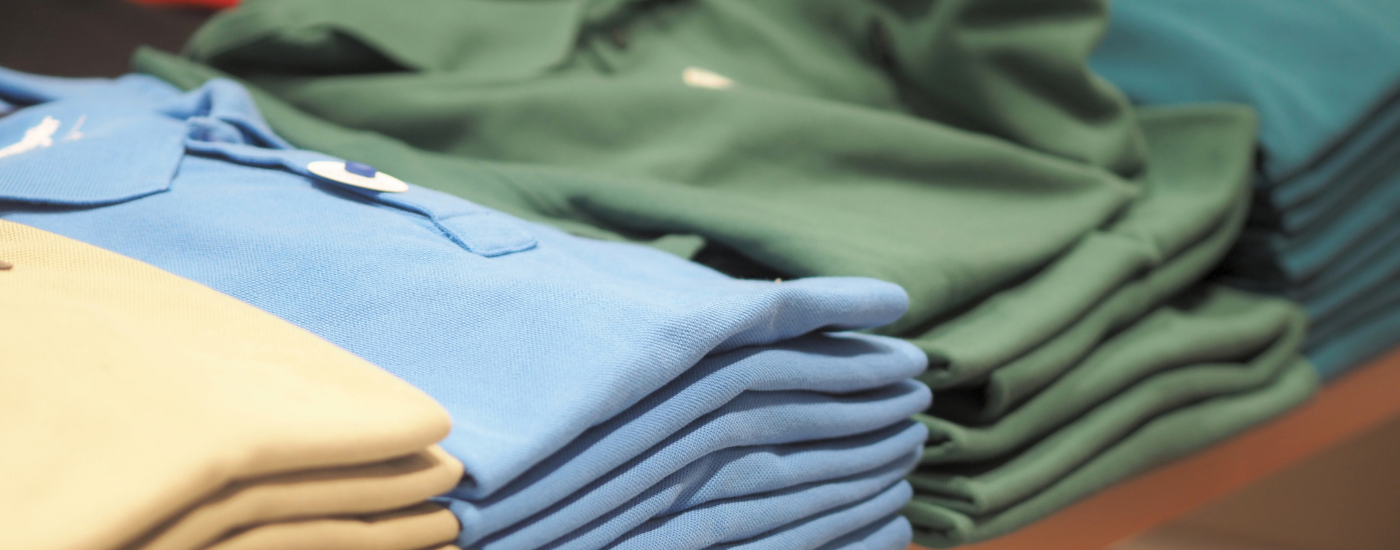
Old company uniforms can become a problem long after employees stop wearing them.
A stack of embroidered polos after a rebrand, work shirts from former employees, outdated safety apparel, or uniforms carrying a recognizable company logo may no longer have value to the business. But that does not necessarily mean they belong in a dumpster or donation bin.
For businesses, the right way to dispose of old company uniforms depends on what is on the clothing, whether the items could be reused improperly, their condition and material, and whether recycling is available.
In many cases, organizations should consider secure destruction before recycling, particularly when uniforms contain company branding, employee identification, patches, insignia, or other features that should not remain in circulation.
Black Ops Destruction provides secure textile destruction and recycling for businesses and organizations throughout Ohio and the Midwest, including uniforms, workwear, branded apparel, and other textiles.
What Should You Do With Old Company Uniforms?
Before getting rid of company uniforms, separate them based on what they contain and the risk associated with reuse.
A plain, unbranded garment may be suitable for donation or textile recycling. A uniform displaying a company logo, employee name, department, security designation, or recognizable insignia deserves more consideration.
Businesses generally have four options:
- Reuse or redistribute uniforms internally
- Donate appropriate garments
- Send eligible materials for textile recycling
- Securely destroy uniforms that should not remain intact
The right choice can vary within the same cleanout. A business may have some clothing suitable for reuse and other garments that should be destroyed.
The important part is making that decision before uniforms leave your control.
Why Throwing Company Uniforms Away Can Be a Problem
A uniform does more than cover an employee. It can communicate where someone works, what organization they represent, and in some cases what role they perform.
Consider what may remain visible on retired workwear:
- Company logos
- Employee names
- Embroidered titles
- Department names
- Security markings
- Government or institutional insignia
- Reflective or specialty markings
- Sewn-on patches
- Branded colors and designs
Putting those garments into general waste does not remove any of those identifiers.
The same concern applies to indiscriminate donation. Donation can be appropriate for many types of clothing, but an organization should first determine whether it is comfortable with the garment remaining intact and potentially being worn, resold, or redistributed.
That distinction is especially important for uniforms associated with healthcare facilities, government operations, security functions, manufacturing facilities, schools, transportation operations, and other recognizable workplaces.
Should You Donate Old Employee Uniforms?
Sometimes. Donation makes the most sense when there is little risk associated with the garment remaining usable.
For example, plain clothing with no company branding or identifying information may be a reasonable candidate if it meets the receiving organization's requirements.
Branded uniforms require a different decision.
Removing a name badge does not necessarily remove the company identity. Embroidery, screen printing, patches, distinctive designs, or permanent markings may remain.
Before donating uniforms, ask:
- Does the clothing identify our company or organization?
- Could someone reasonably mistake the wearer for an employee?
- Does it identify a department, location, or job function?
- Are logos or insignia difficult to remove completely?
- Would we be comfortable seeing this garment on a resale marketplace?
- Does our organization have an internal policy for retired uniforms?
If those questions raise concerns, secure destruction may be more appropriate than donation.
Can Old Company Uniforms Be Recycled?
Many textiles can potentially enter recycling streams, but recyclability depends on the material, condition, composition, contamination, and available processing options.
Company uniforms can include:
- Cotton
- Polyester
- Cotton-polyester blends
- Denim
- Fleece
- Performance fabrics
- Workwear
- Jackets and outerwear
- Scrubs and similar garments
Uniforms may also contain non-textile components such as zippers, buttons, reflective material, fasteners, patches, or other attachments.
This is why businesses should not assume that every uniform can simply be placed into a general recycling container.
EPA recycling guidance notes that textiles generally should not be placed in curbside recycling unless the local recycling program specifically accepts them.
For branded or sensitive apparel, there is another question to answer first: Should the garment remain intact long enough to be reused?
Secure destruction can address that concern. Recoverable textile material can then be directed toward appropriate recycling or repurposing options when available.
Uniform Recycling vs. Uniform Destruction
Recycling and destruction are not necessarily competing choices.
For some businesses, the goal is to accomplish both.
Uniform recycling focuses on recovering usable textile material rather than treating the garment as ordinary waste.
Uniform destruction focuses on making sure the original uniform can no longer be used as intended.
That distinction matters when the item carries branding or identifying information.
A business retiring plain, unbranded textiles may primarily care about finding an appropriate recycling outlet. An organization retiring hundreds of logoed employee uniforms may need to address secure destruction before considering what happens to the remaining material.
The question is not simply, "Can we recycle this?"
It is also, "Do we need to make sure this cannot be worn again?"
When Does Secure Uniform Destruction Make Sense?
Secure destruction becomes particularly useful when an organization needs greater control over what happens to retired apparel.
Common situations include:
Employee Offboarding
Uniforms returned by departing employees can accumulate over time. Establishing a consistent process prevents individual departments from making different disposal decisions.
Company Rebranding
A logo change can leave businesses with boxes, pallets, or storage rooms full of obsolete apparel. Although the clothing may still be wearable, keeping old branding in circulation may not be desirable.
Uniform Replacement Programs
Companies replacing workwear across a department or multiple locations may suddenly have a substantial volume of retired uniforms to manage.
Facility Closures
Closing an office, warehouse, plant, healthcare facility, or other operation can uncover years of stored uniforms and branded materials. A larger commercial cleanout may also involve records, electronics, equipment, and other materials that require different handling.
Damaged or Obsolete Apparel
Uniforms may no longer meet company requirements because they are damaged, outdated, defective, or associated with a discontinued program.
Sensitive or Recognizable Uniforms
Some uniforms carry more significance than ordinary branded apparel. Government, healthcare, security, institutional, and other distinctive uniforms may warrant additional controls when they are retired.
How Does Secure Company Uniform Disposal Work?
The exact process depends on the project, but businesses should look for a controlled process from collection through final handling.
A typical project may involve:
1. Identify the material
Determine what needs to be removed, including uniforms, work shirts, jackets, scrubs, branded apparel, or related textiles.
2. Estimate the volume
A few boxes from one office require different planning from pallets of apparel consolidated from multiple facilities.
3. Separate sensitive apparel
Identify garments carrying logos, names, insignia, patches, or other features that make secure destruction appropriate.
4. Arrange secure collection
The provider coordinates collection based on the volume, location, accessibility, and project requirements.
5. Maintain controlled handling
Materials should remain controlled while they are collected, transported, and processed.
6. Destroy the uniforms
The garments are processed so they are no longer usable in their original form.
7. Handle recoverable material appropriately
Where recycling or repurposing is available and appropriate, recoverable textile material can move into the applicable processing stream.
8. Maintain project documentation
Depending on the service, documentation such as a Certificate of Destruction may be available to document completion.
For businesses with multiple facilities, planning these steps as one coordinated project can be easier than allowing each location to decide independently how to dispose of uniforms.
What Types of Company Apparel May Need Secure Destruction?
Uniform destruction is not limited to traditional button-down work shirts.
Businesses may need to dispose of:
- Employee uniforms
- Corporate polos
- Logoed T-shirts
- Branded jackets
- Work pants
- Coveralls
- Scrubs
- Lab coats
- Safety apparel
- Hospitality uniforms
- Warehouse apparel
- Promotional clothing
- Branded hats
- Outdated company merchandise
- Defective apparel
- Returned branded clothing
If a larger cleanout also includes obsolete branded merchandise or other products that should not return to circulation, product destruction can be coordinated alongside textile destruction.
A useful rule is to evaluate the item based on what it communicates and whether the organization wants it to remain usable.
What About Logos, Patches and Employee Names?
Removing identifying elements manually may sound like an easy alternative to destroying an entire uniform, but it can become impractical quickly.
A business may have hundreds or thousands of garments with embroidered logos, sewn-on patches, screen printing, or employee names.
Even when one identifying element can be removed, others may remain.
There is also an operational question: who will inspect every garment and verify that all identifying features have actually been removed?
For a small number of garments, manual removal may be manageable. For larger uniform programs, secure destruction can provide a more consistent process for handling the entire batch.
How Should Businesses Handle Large Volumes of Old Uniforms?
Large uniform cleanouts should be treated as a logistics project rather than a clothing donation run.
Start by determining:
- Approximate number of garments, boxes, bags, or pallets
- Number of pickup locations
- Types of uniforms involved
- Whether the apparel is branded
- Whether employee names or insignia are present
- Material types, if known
- Where the uniforms are currently stored
- Whether other branded products also need disposal
- What documentation the organization requires
Do not wait until the uniforms have already been mixed with general trash or transferred to an uncontrolled location.
For multi-location businesses, it can also help to establish one process for all participating facilities. That makes it easier to communicate what employees should retain, return, recycle, or set aside for destruction.
What Should You Ask a Uniform Destruction Provider?
Not every textile project has the same requirements. Before scheduling service, ask practical questions about how the material will be handled.
Useful questions include:
- What types of uniforms and textiles do you accept?
- How are materials collected?
- How is chain of custody handled?
- Where does destruction take place?
- What happens to the material after destruction?
- Are recycling options available for the textiles involved?
- Can you handle large-volume projects?
- Can you coordinate pickups from multiple locations?
- What documentation is available?
- Can other branded products be included in the project?
The answers should help you understand the entire process, not just the destruction step.
Build Uniform Disposal Into Your Company's Process
Uniform disposal is easier to manage when it is planned before storage rooms start filling up.
Businesses with ongoing uniform programs can establish internal procedures covering:
- When employees must return uniforms
- Where returned apparel should be stored
- Who decides whether garments can be reused
- Which items may be donated
- Which items require destruction
- How branded apparel should be secured before pickup
- Who maintains destruction documentation
- How large replacement or rebranding projects will be handled
This turns uniform disposal from an occasional cleanup problem into a defined operational process.
It can also prevent well-intentioned employees from putting sensitive or branded apparel into ordinary trash or donation streams simply because no other procedure exists.
Frequently Asked Questions About Old Company Uniforms
What is the best way to dispose of old company uniforms?
It depends on the garment. Plain clothing may be suitable for reuse, donation, or textile recycling. Uniforms containing company logos, employee information, insignia, or other sensitive identifiers may be better suited for secure destruction, followed by recycling when appropriate and available.
Should businesses throw old uniforms in the trash?
Businesses should evaluate uniforms before putting them into general waste. Throwing away a uniform does not remove company logos, employee names, patches, or other identifying features, and it may also eliminate opportunities to recover recyclable textile material.
Can uniforms with company logos be donated?
They can be, but businesses should first consider whether they are comfortable with the branded garment remaining intact and potentially being reused or resold. When continued circulation creates a concern, destruction may be a better option.
Can destroyed company uniforms still be recycled?
Potentially. Recycling options depend on factors such as fiber composition, garment construction, condition, contamination, and available processing streams. Businesses should ask their destruction provider what options are available for the specific material.
What uniforms should be securely destroyed?
Secure destruction may be appropriate for branded employee uniforms, government or institutional apparel, healthcare garments, security-related uniforms, clothing containing employee names or insignia, and other apparel an organization does not want returned to circulation.
Can a business destroy uniforms from multiple locations at once?
Multi-location projects can be coordinated by consolidating material or arranging collection according to the provider's capabilities. Businesses should provide the number of locations, approximate volume, material types, and timing requirements when requesting service.
Plan the Disposal of Old Company Uniforms Before They Leave Your Control
Old uniforms should not automatically go from a storage room to a dumpster or donation bin.
First determine what can safely be reused, what is appropriate for donation, what may be recycled, and what should be securely destroyed. Branded or identifiable apparel deserves particular attention because the organization's identity can remain attached to the garment long after the employee stops wearing it.
Black Ops Destruction helps businesses and organizations throughout Ohio and the Midwest securely manage retired uniforms, branded apparel, and other textiles. Projects can include secure collection, controlled handling, destruction, and recycling of recoverable material when appropriate.
For organizations replacing uniforms, rebranding, clearing stored apparel, or managing a larger textile project, contact Black Ops Destruction to discuss the materials, volume, locations, and destruction requirements.
Call: 330-888-5410
Email: mmarzullo@blackopsdestruction.com
Contact: Request a Quote
.png)